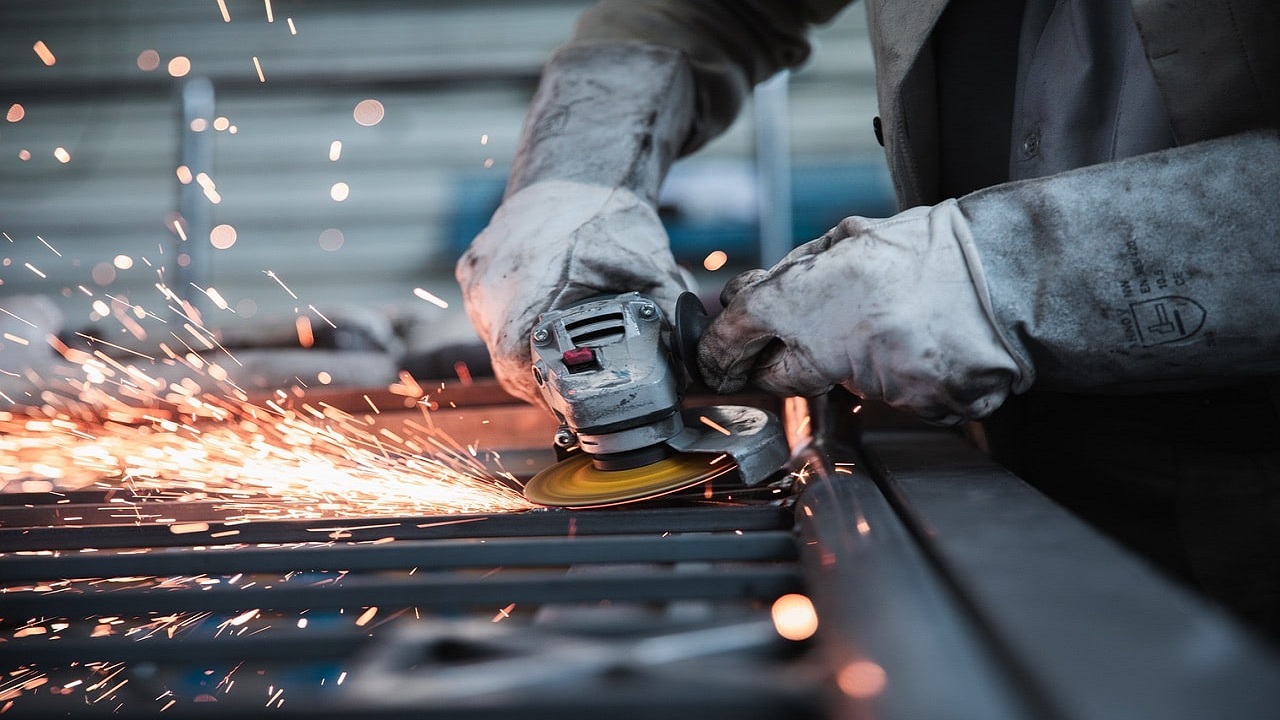
Diversity, efficiency, and the capacity to satisfy the needs of various industries have made sheet metal fabrication a pillar in the contemporary manufacturing process. This manufacturing process, used at ShincoFab, is applied across automotive, aerospace, electronics, and industrial equipment to produce accurate, durable, and cost-effective components. The more complex the designs of the products and the development of technologies, sheet metal fabrication can still be seen as a beneficial element that contributes to innovation and mass production.
Large Precision and Dimensional Accuracy
The capability to obtain a high degree of accuracy and precision in dimensions is one of the main benefits of sheet metal fabrication. The latest fabrication plants come with laser cutting, punching, and bending machines that are CNC-controlled and yield the same results with repeated production cycles. These sophisticated systems reduce human error and can be repeated, which is necessary when dealing with parts that have to fit perfectly in an intricate assembly.
Accuracy is of paramount importance, particularly in the sectors where safety and performance must be maintained at a very narrow margin. The sheet metal fabrication process enables manufacturers to achieve a steady level of quality at the time they produce components of complicated geometries and with precise specifications.
Multifunctional in Design and Usage
The fabrication of sheet metal facilitates a broad spectrum of design provisions, and this is applicable in both simple and complex assemblies. Panel cutting, bending, and welding can be used to change flat metal sheets into enclosures, brackets, frames, panels, and structural components.
Such flexibility enables the manufacturers to adapt to shifting design needs with very little retooling. Adjustments to digital design files are also possible, and such design changes can be applied in a very efficient way; therefore, sheet metal production is perfect for prototyping, developing products, and making custom production.
Cost-Effective Production
One of the greatest benefits of sheet metal fabrication is cost efficiency, especially when production is high or medium volume. There is also a waste reduction factor, automated machines, optimum part nesting, and economical utilization of materials to minimize the cost of production. The sheet metal fabrication may need less material removal as compared to other manufacturing procedures; this is the reason as well, which leads to reduced costs.
Huge Selection of Materials
The use of sheet metal fabrication offers wide support to metals such as aluminum, stainless steel, carbon steel, copper, brass, titanium, and other alloys. The materials have their own properties, which include strength, resistance to corrosion, conductivity, and lightness.
Such material compatibility enables manufacturers to select the most appropriate metal depending on its functional need, environmental factors, and cost factors. Various materials can be worked with; thus, the sheet metal fabrication can adapt to various needs of various industries and applications.
Power and Hardiness of Made Components
Sheets of metal have a reputation for being durable and strong. The process of forming and bending increases the structural integrity without appreciably increasing the weight, thus sheet metal components can be used in demanding conditions. Welded assemblies also enhance carrying capacity and long-life stability.
Hardened sheet metal components are effective in dealing with mechanical loads, variations in temperature, and exposure to adverse environments. Such dependability minimizes the maintenance and lengthens the lifetime of completed products.
Efficient Surface Finishing Integration
The other benefit of sheet metal fabrication is uninterrupted surface finishing processes. Powder coating, painting, anodizing, electroplating, or polishing may then be applied to the parts after fabrication to enhance the look and functional use.
Surface finishing increases the corrosion resistance, wear resistance, and beauty so that the components satisfy both technical and aesthetic needs. Such a combined strategy lessens secondary processing and decreases the total production processes.
Quickened Lead Times and Production Rate
The recent development of sheet metal fabrication takes advantage of automated processes and electronic manufacturing that lead to a major decrease in lead time. The process has been made fast and efficient since it allows design upload and instant quoting through CNC-controlled production.
Shorter turnaround times help the manufacturers to attend to the market needs fast, launch products at a faster rate, and save time-to-market. This is a competitive number when dealing with industries where quick innovation is a requirement.
Prototyping and Mass Production
The sheet metal fabrication provides versatility in the various steps of production that include prototyping up to large-scale production. Prototypes may be created quickly to trial form, fit, and operate, and then proceed to mass production.
After designs have been completed, high-volume production can be scaled to the same fabrication processes. This consistency minimizes transition risks and provides consistency between prototype and finished products.
Conclusion
The fabrication of sheet metal has a wide range of benefits that render it inevitable in the contemporary manufacturing industry. Its accuracy, flexibility in use, cost-effectiveness, flexibility in materials, and strength suit a wide variety of industrial uses. Sheet metal fabrication allows the manufacturing companies to create high-quality parts at a high rate of production using advanced automation, short production cycles, and built-in finishing options that are reliable and high-quality.