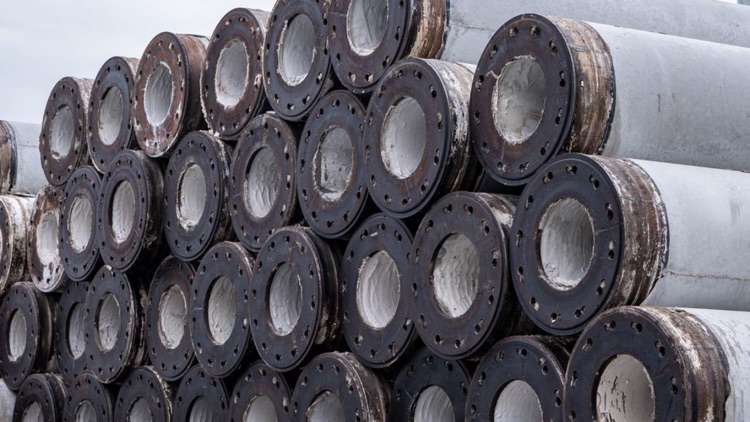
Pipe piles have been popular in bridge foundation construction due to their strong and reliable support in the varying soil and water conditions. Bridges have a load of traffic, and therefore, their bases should be long-lasting, stable, and safe. The steel pipe piling can be used by engineers to construct deep foundations that can convey the loads to the more solid soil or rock. They are a popular choice in the construction of modern bridges due to their strength, flexibility, and simple installation.
High Load-Bearing Capacity
The high load-bearing capacity of pipe piles is one of the reasons why they are being used in the foundation of bridges. Bridges have to be able to hold the weight of vehicles, wind, and occasionally, earthquakes. Steel pipe piles have the potential to support an axial load (vertical weight) and a lateral load (side pressure). The end bearing and skin friction transfer the load deep into the ground. This combination enables the structure to be stable even in heavy and continuous usage and makes pipe piles a good choice in big bridge projects.
Suitable for Different Soil Conditions
The construction of a bridge usually occurs in sections of weak or soft soil, like riverbanks, coastal areas, or valleys. Pipe piles are best used under such circumstances since they can be pushed deep into the soil till they reach firmer soil or rock layers. They have good working conditions in the clay, sand, gravel, and mixed soil. This is because their capacity to adjust to varying ground conditions prevents the foundation failure of the structure and secure long term structural safety of the structure.
Easy Installation and Construction Efficiency
Pipe piles install relatively easily when compared to other systems of deep foundations. They may be beaten into the ground by hammering, vibration, or drilling according to the ground conditions. This is flexible so that construction time can be minimized and the efficiency of the project can be enhanced. Rapid installation is a significant benefit in bridge projects where the schedule may be a critical factor. Also, it is possible to weld pipe piles to increase their length, which can be used in deep foundation needs without significant complexities.
High Structural Strength and Durability
Steel pipe piles are highly structural and have a high service life. They will be able to endure a lot of stress and adverse weather conditions. This is unlike other materials, and steel does not crack easily under pressure; it can be used in bridges with a long life span. Pipe piles are further strengthened and stabilized when they are filled with concrete. This mixture of concrete and steel enhances rigidity and bending or deformation resistance.
Flexibility in Design and Application
The flexibility of the design of pipe piles is another strength. Depending on the requirements of the project, engineers are able to select various diameters, wall thicknesses, and lengths. This enables customization with respect to bridge size, loading conditions, and soil properties. Pile foundations can consist of pipe piles as well as groups of pipes. This flexibility in design assists the engineers in developing safe and cost-effective solutions to various bridge structures.
Resistance to Seismic and Dynamic Loads
Bridge foundations in areas prone to earthquakes or where there is intense vibration should have the capability of absorbing and transferring dynamic forces. Pipe piles are good in such an environment due to their strength and flexibility. They are also able to flex to some extent without rupturing, thus minimizing the structural destruction in case of an earthquake. Their deep foundation construction also makes the bridge more stable by running deeper into more stable ground layers, minimizing the chances of collapsing or moving the bridge.
Cost-Effective Long-Term Solution
Even though steel pipe piles might be more expensive than certain other types of foundations in the short term, they are very cost-effective in the long-term. Their longevity minimizes the possibility of repair or replacement of the products, which reduces the cost of maintenance in the long run. The rapid installation is also a way to lower labor and equipment costs. Pipe piles can be used as a cost-efficient alternative when it comes to the entire lifecycle of a bridge project.
Conclusion
Modern bridge foundations include piles that are made up of pipe piles due to their ability to offer strength, durability, and flexibility. They thrive in various water and soil environments, bear heavy weight, and provide stability in the long run. They are easy to install and survive against environmental and seismic forces, making them an option that is convenient to the engineers. All in all, pipe piles assist in making sure that the bridges are safe, stable, and functional over a long period.